Organic Sleep Setup · Bed Basics
Mattress or Foundation: Understanding the Difference in an Organic Sleep Setup
One is the surface you sleep on. The other holds that surface up. It sounds simple—until shopping language blurs the distinction between a foundation, a frame, a platform and an adjustable base. Knowing which part does what can help you protect a mattress, plan a comfortable bed and avoid a support mismatch.
Published November 12, 2026
A mattress is the layer designed for your body: its materials cushion you, distribute pressure and shape the feel of the bed. A foundation is the support beneath it. That support keeps the mattress level, carries its weight and, depending on its construction, may also affect airflow, bed height and how the bed functions.
The distinction matters with any mattress. It is especially useful when planning an organic sleep setup, where shoppers may be weighing natural materials, construction details and durability alongside the bed’s underlying structure. “Organic” describes particular materials or production standards—not a universal support system. An organic mattress still needs a base that suits its design and meets its maker’s requirements.
Start with the mattress manufacturer’s guidance, not the assumptions attached to a familiar bed frame. A beautiful platform may have slats too widely spaced for a particular mattress. A box spring may be incompatible with a foam design. An adjustable base may offer useful positioning but require confirmation that the mattress is made to bend. The right pairing is less a style choice than a practical agreement between two pieces of equipment.
What the mattress does—and what it does not
The mattress is the sleep surface. Its core and comfort layers determine much of its feel: how firm or yielding it seems, how it responds to pressure, and how readily it changes shape as you move. Depending on the design, it may contain latex, springs, foam, wool, cotton or a combination of materials. These layers work together, but they are not intended to span unsupported gaps indefinitely.
That last point is easy to overlook. A mattress may look solid and substantial, but it is not a substitute for a properly designed base. If support beneath it is uneven, too flexible or widely spaced, the mattress can sag or deform. The result may be a less even sleep surface, and in some cases may affect the product’s warranty. The details depend on the mattress: there is no single slat spacing or foundation rule that applies to every model.
Organic materials do not remove this requirement. A natural latex mattress, for instance, may need consistent support across its footprint; a different construction could specify another kind of base. “Natural,” “organic” and “chemical-conscious” are descriptions of materials or manufacturing criteria, not instructions for how a mattress must be supported. The product’s own care and setup guide is the authority.
What counts as a foundation?
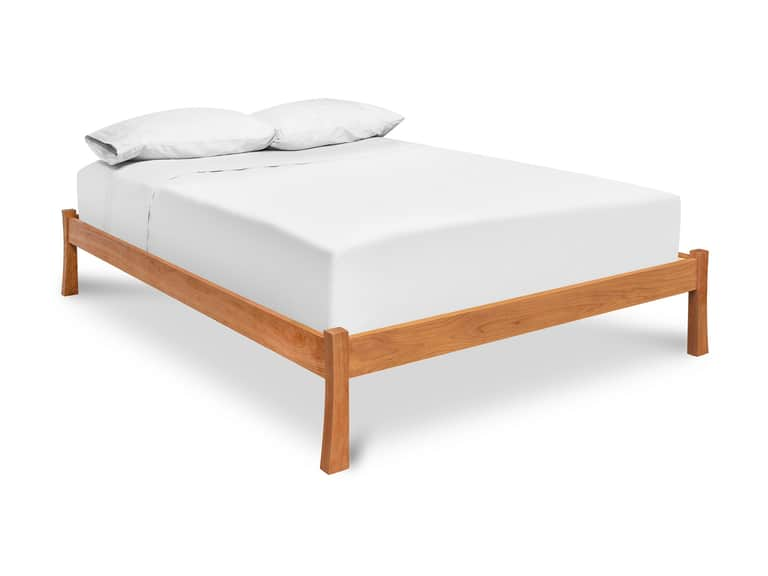
In everyday conversation, “foundation” often means the structure directly beneath a mattress. In product listings, however, the word can refer to several different things. A traditional foundation is typically a firm, level support surface, sometimes with a rigid internal structure. A box spring is a distinct, older style of base with a spring system. A platform bed may provide support through a solid deck or closely spaced slats, while an adjustable base uses a motorized mechanism to raise sections of the bed.
These options are not interchangeable just because they occupy the same place in the bed. A box spring can be appropriate for some mattresses and unsuitable for others. A platform frame may need a separate foundation—or may already include the support the mattress needs. An adjustable base adds movement and controls, but its compatibility depends on both the mattress construction and the base’s design.
It helps to think of the bed as a small system. The frame supports the foundation or built-in platform; that surface supports the mattress; the mattress supports the sleeper. Some products combine two roles. A platform bed, for example, can be both frame and foundation. In other setups, a bed frame holds a separate foundation. Ask what is included rather than relying on the name alone.
A quick comparison
| Component | Main job | Questions to ask |
|---|---|---|
| Mattress | Provides the surface and cushioning for sleep. | What materials and construction does it use? What support does its maker require? |
| Foundation or base | Supports the mattress evenly and keeps it level. | Is it approved for this mattress? Are slat spacing, weight limits and dimensions suitable? |
| Bed frame | Holds the base or mattress assembly and establishes its position in the room. | Does it include a platform, or does it need a separate foundation? |
| Adjustable base | Supports the mattress while allowing selected sections to move. | Is the mattress designed to flex? Does the base fit the frame and mattress size? |
The table is a starting point, not a replacement for the setup instructions. A mattress maker may define a specific foundation type, maximum gap between slats, central support requirement or other condition. If two instructions seem to conflict, ask the manufacturers before assembling the bed.
Why the pairing matters for an organic mattress
People often put considerable thought into the materials close to the body: fiber content, certifications, processing and the feel of the sleep surface. The foundation attracts less attention, even though it can influence how well the mattress performs over time. A supportive, compatible base helps preserve a level platform and can reduce the chance that unsupported areas become a weak point.
Airflow is another consideration, though it should not be treated as a cure-all. Some bases leave open space under the mattress; others use a solid surface. Ventilation needs vary by mattress construction and room conditions, so follow the manufacturer’s advice rather than assuming that more gaps are always better. A slatted platform may offer airflow but still fail to provide adequate support if its slats are too far apart.
Bed height is practical, too. A foundation can raise the mattress, changing how easy it is to get in and out of bed and how much space remains beneath it. Adding a foundation to a platform frame that already includes a support deck may make the bed higher than intended. Before buying, measure the frame, foundation and mattress together, including the height of any headboard or surrounding furniture.
Then consider weight capacity. The base must support the mattress, sleepers and ordinary use without exceeding its stated limit. For a shared bed, a split configuration or an adjustable system, verify the limits and dimensions for the specific size. A strong-looking frame is not proof of compatibility; product specifications matter more than appearance.
Slats, solid decks and the space between
Slatted frames are common because they are straightforward and can leave space beneath the mattress. Their suitability depends on details: the slats’ width, their spacing, the strength of the frame and whether a center rail or legs are required. A mattress may need closely spaced, rigid slats; another may have different specifications. Check the manual for the maximum permitted gap rather than guessing based on a general rule found online.
A solid deck provides a continuous surface, but it is not automatically the right answer for every mattress. Confirm the maker’s instructions about solid support, ventilation and any required clearance. If a deck is part of a platform bed, check whether it is designed to carry the mattress directly or whether a separate base is expected.
For a larger mattress, center support deserves particular attention. Some bed frames require a central rail and legs that reach the floor to prevent the middle from carrying an undue load. The need can depend on the frame and mattress dimensions. Make sure those parts are installed as directed; a support rail that is present but not bearing on the floor may not do its intended job.
Choosing between a foundation and an adjustable base
A fixed foundation is the simpler choice when the priority is a stable, level platform. It may be the better fit for a conventional frame, a straightforward bedroom layout or a mattress whose manufacturer specifies a non-moving base. Its simplicity can also make setup and long-term use easier to understand.
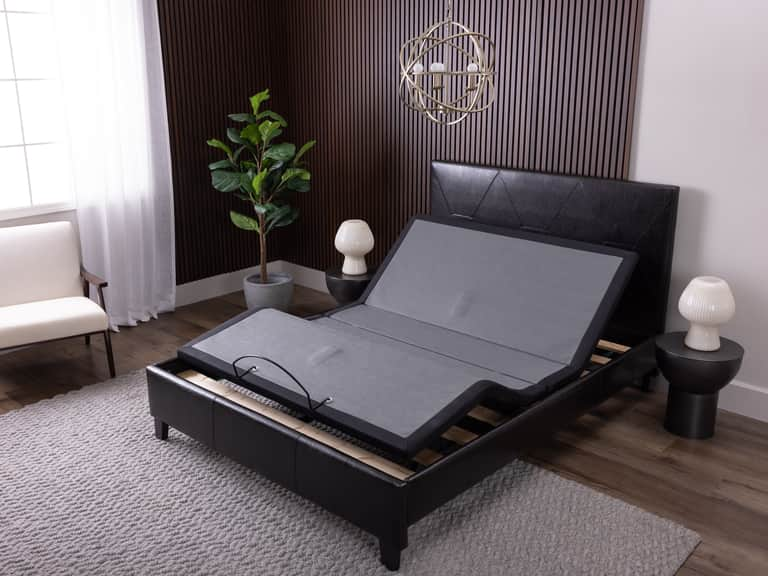
An adjustable base adds another kind of utility: the head or foot of the bed can be raised, depending on the model. That may suit someone who likes to read or relax in bed, or simply wants the option of changing position. But an adjustable base is not a universal upgrade. The mattress must be compatible with articulation, and the frame, dimensions, power access and weight capacity all need checking. For medical concerns, seek advice from an appropriate health professional; adjustable positioning is not a substitute for diagnosis or treatment.
For example, the Leggett & Platt S-Cape HF 2.0 Adjustable Base offers head and foot articulation, app and remote controls, and a zero-clearance design intended for platform-bed placement. Those features describe the base; they do not establish that every organic mattress can be used on it. Confirm compatibility with the mattress maker, and verify the product’s dimensions, frame requirements and weight capacity before deciding.
Some adjustable bases are designed to sit inside a bed frame; others may be used in different configurations. The product specifications should make clear which arrangements are supported. If two people share a bed, a split configuration can allow separate positioning on each side, but it may change the mattress and frame requirements. Measure the complete setup before delivery, especially in a room with narrow stairs, tight corners or limited clearance.
A practical checklist before you buy
- Read the mattress instructions. Look for approved base types, slat spacing, center support, ventilation and warranty conditions.
- Identify what your frame already provides. Determine whether it has a built-in platform or requires a separate foundation.
- Match the dimensions. Confirm mattress, base and frame size, and measure the finished bed height.
- Check structural capacity. Review weight limits and any center-rail or leg requirements for the size you need.
- Confirm flexibility for an adjustable base. Get approval for the specific mattress construction, not merely the general category.
- Think through the room. Consider outlets, access to controls, under-bed clearance and the route into the bedroom.
- Keep the documentation. Save manuals and purchase details so care and warranty terms remain easy to find.
This checklist can also prevent a common mistake: buying a foundation because it is described as “universal.” The word may refer to sizing or intended use, but compatibility still depends on the mattress and frame. When product pages are unclear, request a written answer from the manufacturer or retailer before committing.
Care, inspection and the life of the setup
A good pairing is not a set-and-forget arrangement. During routine bed care, look for loose slats, a shifting frame, uneven support or unusual movement. If a mattress begins to feel different, inspect the base as well as the sleep surface. A damaged or improperly assembled foundation can affect comfort, and replacing a mattress will not correct a weak support structure.
Follow the mattress maker’s instructions for rotation or other care; not every mattress should be flipped, and schedules vary. Keep the foundation clean and dry according to its materials. If the bed is moved, reassemble it carefully and restore any required center supports. For an adjustable base, follow the manual for electrical connections and operating clearances, and do not treat a motorized mechanism like a fixed slatted platform.
In an organic sleep setup, the goal is not to make every component natural or to select the most complicated base. It is to understand what each piece contributes and choose materials and structures that work together. A well-matched foundation may be visually quiet, but its role is consequential: it gives the mattress a stable place to do its job.
The bottom line
A mattress is the cushioning sleep surface; a foundation or base is the support beneath it. A frame holds the arrangement, though some frames include their own platform. An adjustable base adds movement and should be chosen only when the mattress and frame are compatible.
For an organic mattress, begin with the maker’s support requirements, then check spacing, stability, dimensions, height and capacity. The label on the materials may tell you what the mattress is made from. The setup guide tells you what it needs underneath. Read both, and the bed becomes easier to plan—and more likely to remain comfortable and properly supported over time.