A rigorous, editorial exploration of two leading mattress technologies — memory foam and hybrid — with practical guidance for diverse sleep styles, room setups, and personal comfort philosophies. This definitive guide blends sleep science, consumer-tested insights, and a classic compare-and-contrast framework to illuminate when one technology outperforms the other in achieving restful, uninterrupted slumber.
At the core of any mattress decision is a question of balance: how a surface contours to your body, how it dissipates heat, how durable the materials are, and how your sleep habits align with the bed’s dynamic properties. Memory foam excels at conforming to curves, isolating motion, and delivering a snug cradle for pressure relief. Hybrid designs, by contrast, seek to marry the best of foam with the responsiveness and bounce of springs, often delivering improved air flow and a more traditional sensation of lift. The result is a two-act play: memory foam as a private, contouring embrace; hybrids as a responsive, ensemble partner for movement and cooling.
Sleep quality anchors daily performance, mood, and long-term health. The mattress you choose influences spinal alignment, pressure points, temperature regulation, and even how quickly you drift into restorative sleep stages. In this guide, we’ll explore how memory foam and hybrid mattresses address common concerns—pressure relief, motion transfer, cooling, durability, and suitability for various sleep styles—so you can build a decision tree grounded in evidence and practical experience.
Memory foam mattresses are engineered to respond to body heat and pressure, allowing the material to soften and gradually cradle the contours of the body. The result is superior pressure relief for many sleepers, particularly those who spend significant portions of the night in a single position or who experience localized discomfort. The material’s viscoelastic properties mean motion transfer is minimized; if a partner shifts, your side of the bed stays relatively still. This makes memory foam a natural ally for couples with different sleep schedules or for light sleepers who are easily disturbed by motion.
Think of memory foam as a soft, supportive cocoon that embraces you. For many back and side sleepers, it provides a familiar, predictable surface that helps maintain neutral alignment. Depending on density and the arrangement of comfort layers, some memory foams can feel “hot” at night or cling a bit more vigorously to your shape—an important consideration for warm climates or hot sleepers.
Hybrids place a coil-based support system beneath a top layer (which may be memory foam, latex, or other materials). This configuration aims to deliver the bounce and airflow associated with traditional innerspring beds, while preserving the pressure-relief and contouring benefits of foam or other comfort layering. The result is a mattress that often feels more buoyant than a pure memory foam surface, with edges that feel more robust and a temperature profile that can be cooler thanks to independent coil ventilation and zoning designs.
For many stomach and back sleepers, hybrids provide a predictable, supportive surface with enough given to prevent pinching at the shoulders. For some combination sleepers or those who crave more immediate response, the lift of a hybrid can feel less enveloping than memory foam, which may be preferable for mobility or posture shifts during the night.
To translate the high-level differences into actionable choices, consider these lenses: sleep position, body weight, temperature sensitivity, and room constraints. Are you a restless sleeper who moves often, or a strict side sleeper seeking deep pressure relief? Do you share your bed, and how critical is motion isolation? Is cooling a central concern? The answers help determine which technology aligns with your priorities.
In practical terms, if you’re troubleshooting a sleepy, restless partner scenario or need pronounced motion isolation for light sleepers, memory foam is a strong candidate. If you value motion responsiveness, better edge support, and cooling potential, a well-chosen hybrid may be the more robust choice. The optimal path often lies in a guided trial and, where possible, a close look at mattress construction details such as density, coil count, and the layering sequence.
Understanding the bed’s anatomy helps filter differences in memory foam and hybrid designs. Both types typically comprise a comfort layer that contacts the body, a transitional layer that modulates the feel, and a foundational support system. For memory foam-centric designs, you’ll see a higher proportion of foam layers, density descriptors, and sometimes gel or open-cell structures. For hybrids, you’ll encounter a coil system with a foam or latex top layer, sometimes combined with a transition foam layer that blends the two sensations.
To help you make a fast, confident selection, consider these scenarios as a decision shorthand:
With these rules of thumb, you can narrow the field quickly and then move to hands-on testing. If you can, use trial periods to evaluate how the surface responds to your body over several weeks, noting changes in comfort, alignment, and sleep continuity. The ultimate goal is a bed that remains supportive and comfortable through your nightly cycles.
To enrich the navigation through memory foam and hybrids, consider how thinkers and innovators from different time periods have shaped our understanding of comfort, design, and material science. Three illustrative figures offer a cross-temporal lens on sleep, invention, and ergonomics.
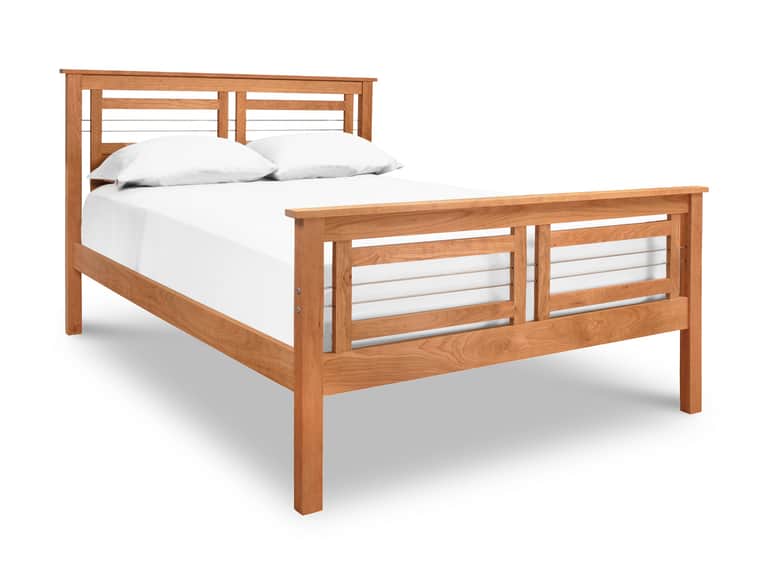
The Contemporary Cable Bed is a standout example of modern bedcraft that blends traditional joinery with a contemporary aesthetic. Handcrafted in Vermont from natural Cherry, Maple, and Walnut, it embodies a durable, elegant foundation for any mattress technology. The bed’s solid hardwood construction, complemented by stainless steel cable accents and an eco-friendly hand-rubbed oil finish, signals a commitment to longevity and a refined, quiet presence in the sleep environment.
For readers exploring the cross-pod architecture of sleep surfaces, this bed represents how core support and design integrity frame the sleeping experience. A robust frame does not just hold a mattress; it supports spine alignment, airflow beneath the bed, and the room’s overall ambience. While the bed itself is a foundation, the mattress and top-layer materials must align with it to deliver a cohesive sleep system.
A solid hardwood bed with traditional joinery and stainless steel cable accents. Handcrafted in Vermont from natural Cherry, Maple, and Walnut, finished with an eco-friendly hand-rubbed oil.
Price: $2,725.00
Materials: Solid hardwood (Cherry, Maple or Walnut, natural finishes)
Finish: Eco-friendly hand-rubbed oil
Origin: Handcrafted in Vermont
In the broader narrative of sleep technology, the bed frame is the stage on which the mattress performs. A frame of robust construction, precise joints, and thoughtful finish can accentuate the mattress’s performance—whether that performance is the immersive contour of memory foam or the balanced lift of a hybrid system.
Memory foam and hybrid mattresses each offer distinct advantages. The best choice hinges on your sleep posture, temperature preferences, and how you value motion isolation versus bounce. By understanding the core differences, the layered composition, and how your room’s layout and bed frame interact with the top layers, you can craft a sleep environment that supports your health and daily performance. The bed is not merely a surface; it is a system. In the bedvsbed framework, the decision is less about a single technology and more about how the entire sleep ecosystem harmonizes with your life.
As you consider the first steps in building your sleep library, you’ll find it helpful to anchor your exploration in a few core pillars: clear comparison articles, data-driven guides, and a glossary of sleep terms that demystify the science behind comfort. The Memory Foam vs Hybrid guide sits at the nexus of these pillars, offering a rigorous, editorially credible resource that helps readers navigate a landscape filled with evolving materials and performance claims. In time, a thoughtful library of side-by-side comparisons, long-form guides, and practical tests will empower readers to decide with confidence, comfort, and clarity.
Note: For readers who want to explore specific products, the brand and product references included here illustrate how a thoughtful, non-commercial approach can integrate real-world options into a broader understanding of sleep quality. The focus remains educational, with transparent sourcing and a commitment to credible, evidence-based guidance.